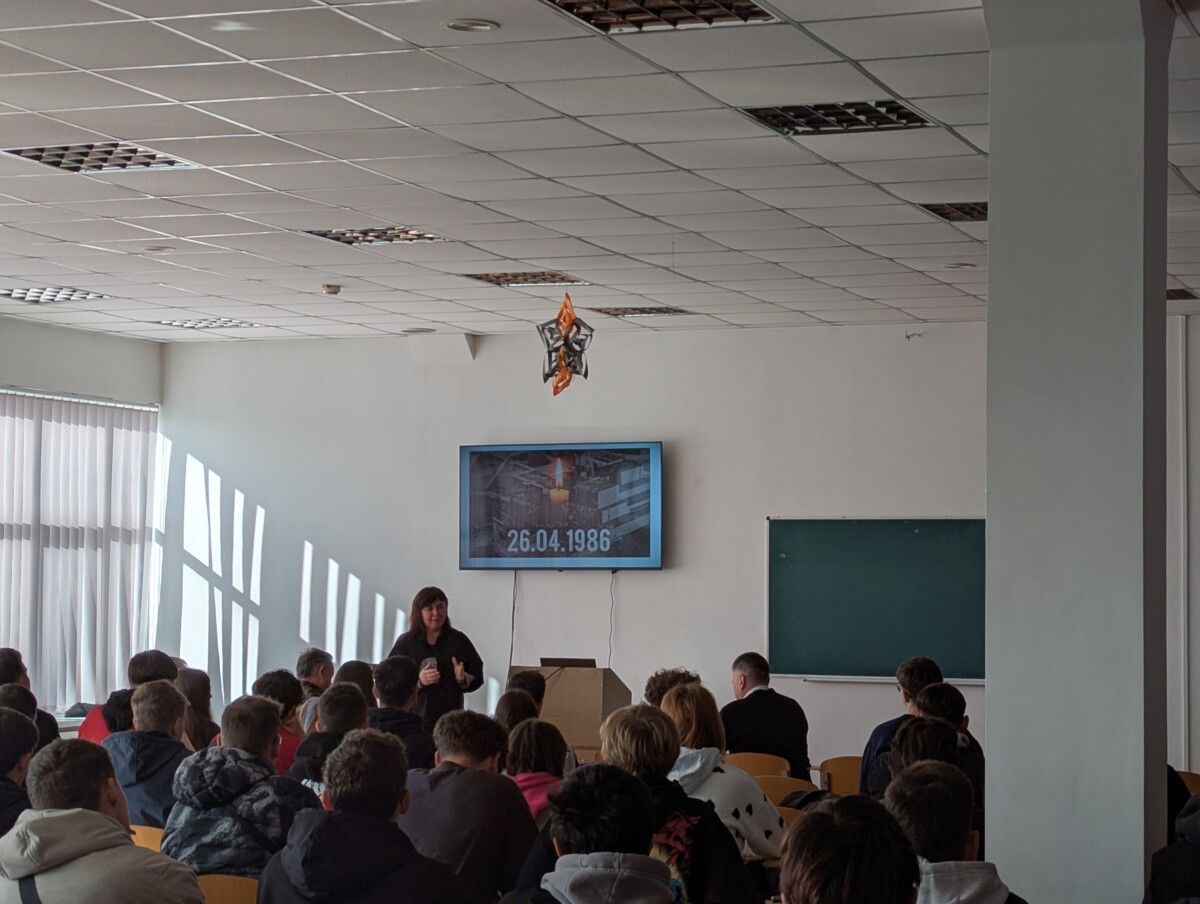
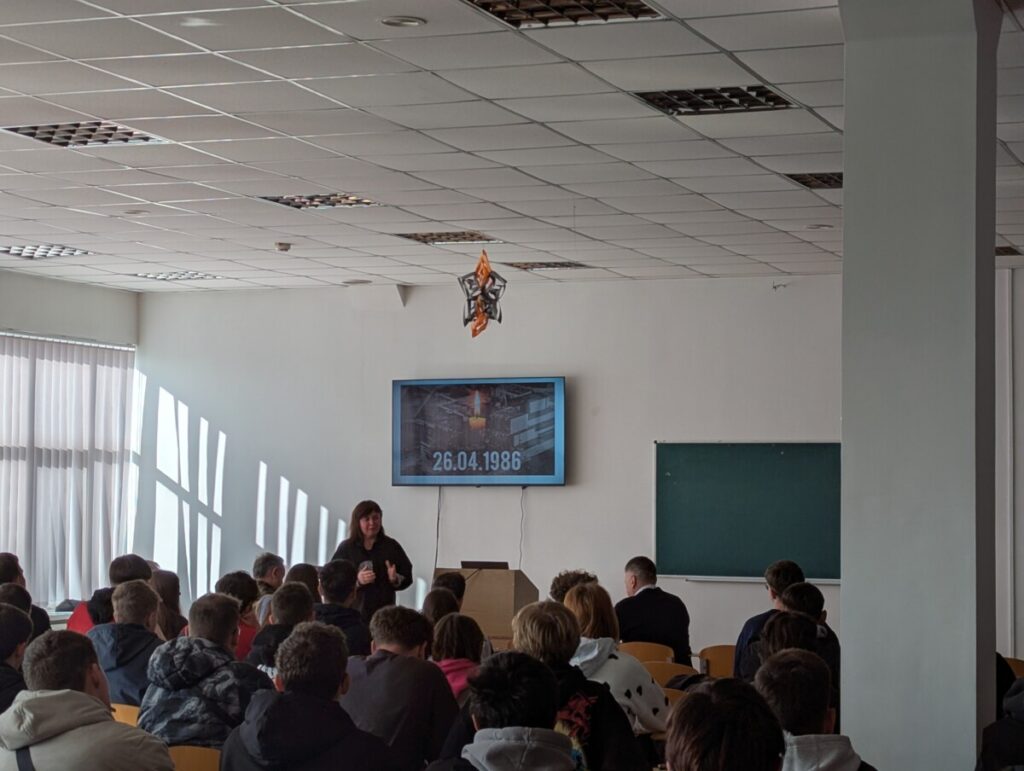
The team of project 101127143 – RISE-UP – ERASMUS-JMO-2023-HEI-TCH-RSCH under the Jean Monnet Module “Radiation Safety: A European-Ukrainian Approach” held an information and awareness-raising event entitled “Invisible Threat: the Chornobyl Legacy and Modern Research on Cosmic Radiation”.
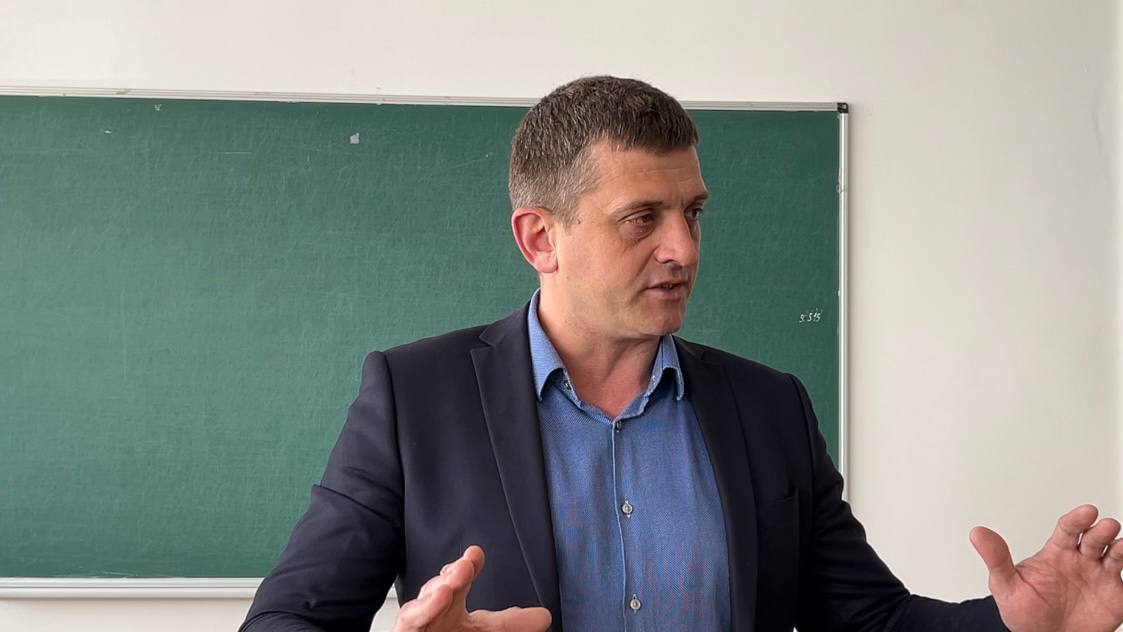
Presentations were delivered by Volodymyr Kotsiubynskyi, Head of the Department of Applied Physics and Materials Science at Vasyl Stefanyk Carpathian National University, and Professor Volodymyra Boichuk from the same department. The target audience of the event consisted of around 100 cadets of the University’s Department of Military Training.
The Department of Military Training provides training for reserve officers, organises and conducts scientific and technical, innovative and methodological activities, and carries out military-patriotic education. For this reason, knowledge about the nature of ionising radiation, sources of radiation hazards, principles of radiation protection and risk assessment is of not only educational but also practical importance for future officers.
During the event, the Chornobyl disaster was considered as one of the key historical examples of the large-scale consequences that can result from neglecting nuclear and radiation safety. Particular attention was paid to the fact that the Chornobyl legacy remains an important source of lessons for science, civil protection systems, public administration and the training of specialists capable of acting under conditions of potential radiation threats.
At the same time, the presentation highlighted modern research on cosmic radiation, expanding the understanding of radiation safety as a multidimensional field of knowledge relevant not only to nuclear energy or medicine, but also to defence training, aerospace research, strategic planning and the assessment of the impact of extreme factors on humans and technical systems. In this way, the historical experience of Chornobyl can be linked with the latest scientific fields, demonstrating that radiation is an invisible but real risk factor that requires a high level of knowledge, discipline and responsibility.
For cadets of the Department of Military Training, knowledge of radiation safety is particularly valuable, as it helps develop readiness to make well-grounded decisions in non-standard and potentially dangerous conditions, strengthens threat assessment skills, improves the culture of safety and fosters awareness of responsibility for protecting people, the environment and critical infrastructure.