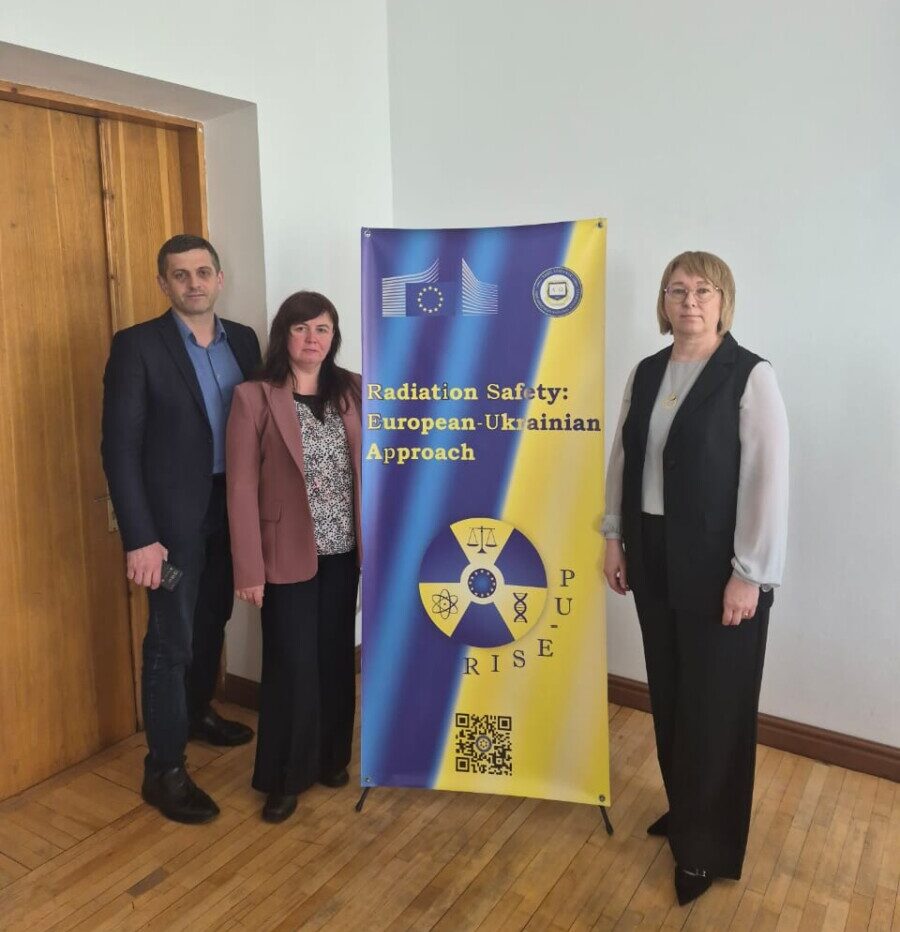
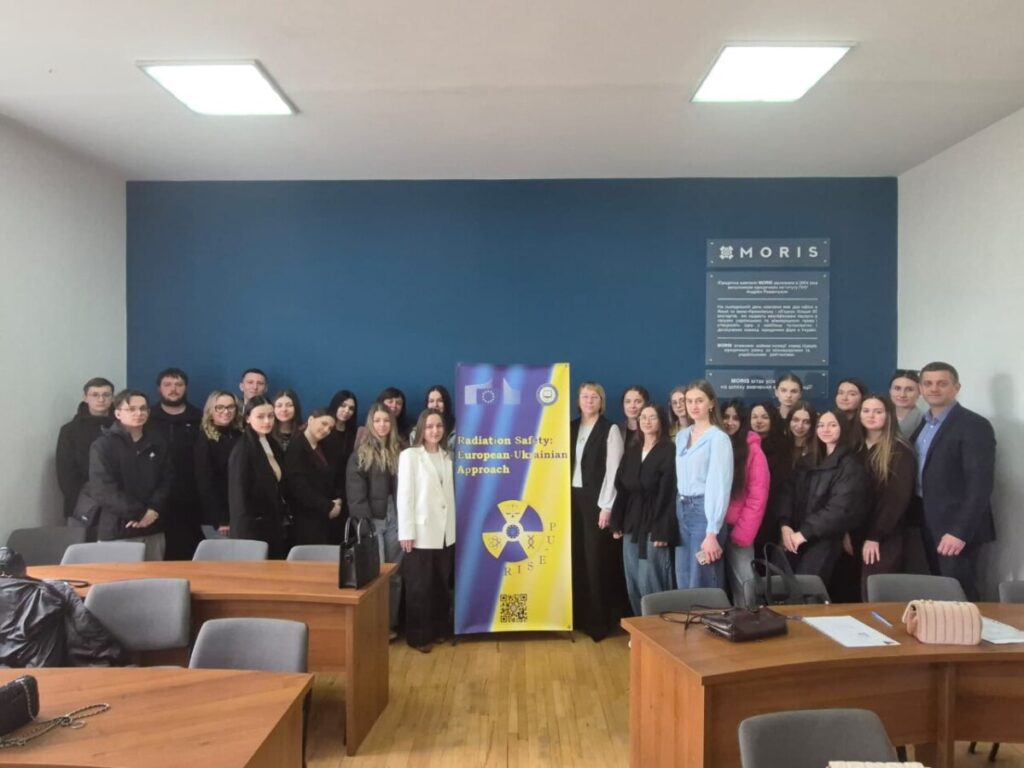
As part of the implementation of project 101127143 – RISE-UP – ERASMUS-JMO-2023-HEI-TCH-RSCH under the Jean Monnet Module “Radiation Safety: A European-Ukrainian Approach”, which is being carried out at the Department of Applied Physics and Materials Science, a scientific and educational event entitled “Legal Aspects of Radiation Safety in the Context of the Current State of Nuclear Energy in Ukraine” was held on 22 April 2026.
The venue for the event was the Law Institute of Vasyl Stefanyk Carpathian National University, which was symbolic given the interdisciplinary nature of the project, combining physical and technical, biomedical, and regulatory and legal areas of training in the field of radiation safety.
The presentation was delivered by Nadiia Kobetska, a member of the High Qualification Commission of Judges of Ukraine, Doctor of Law, Professor at Vasyl Stefanyk Carpathian National University, and a specialist in legal mechanisms for environmental protection and the protection of citizens’ environmental rights. During the event, emphasis was placed on the fact that issues of radiation safety are becoming particularly relevant today in the context of the current challenges facing Ukraine.
The functioning of nuclear energy, the need to ensure the country’s energy resilience, risks associated with military threats to nuclear infrastructure, and public demand for reliable information and legal certainty in this area require a new quality of specialist training and new approaches to shaping a culture of safety.
Special attention during the presentation was given to the importance of introducing European approaches to the legal aspects of working with nuclear technologies and sources of ionising radiation.
This concerns not only the harmonisation of Ukrainian legislation with the norms and standards of the European Union, but also the development of modern legal thinking in which the use of nuclear energy is viewed through the lens of human safety, environmental protection, institutional responsibility, transparency in management decisions and compliance with international obligations.
This fully corresponds to the objectives of the RISE-UP project, which include promoting EU policies in the physical and technical, medical and biological, and legal fields regarding the appropriate use of “green” nuclear energy in the current geopolitical context, improving the quality of professional training according to EU standards, and developing systematic multidisciplinary competences in radiation safety among students and stakeholders.
The event once again confirmed that radiation safety is not merely a technical or medical issue, but a complex social, educational and legal category. In this context, particular importance is attached to the training of specialists capable of working at the intersection of natural sciences, medicine, law and public administration, as well as to the formation of an objective civic position on the use of nuclear energy.
The implementation of such events within the RISE-UP project contributes to the development of a culture of responsible engagement with nuclear energy issues, the dissemination of European values in the field of safety, and the strengthening of the interdisciplinary educational space of Vasyl Stefanyk Carpathian National University.